

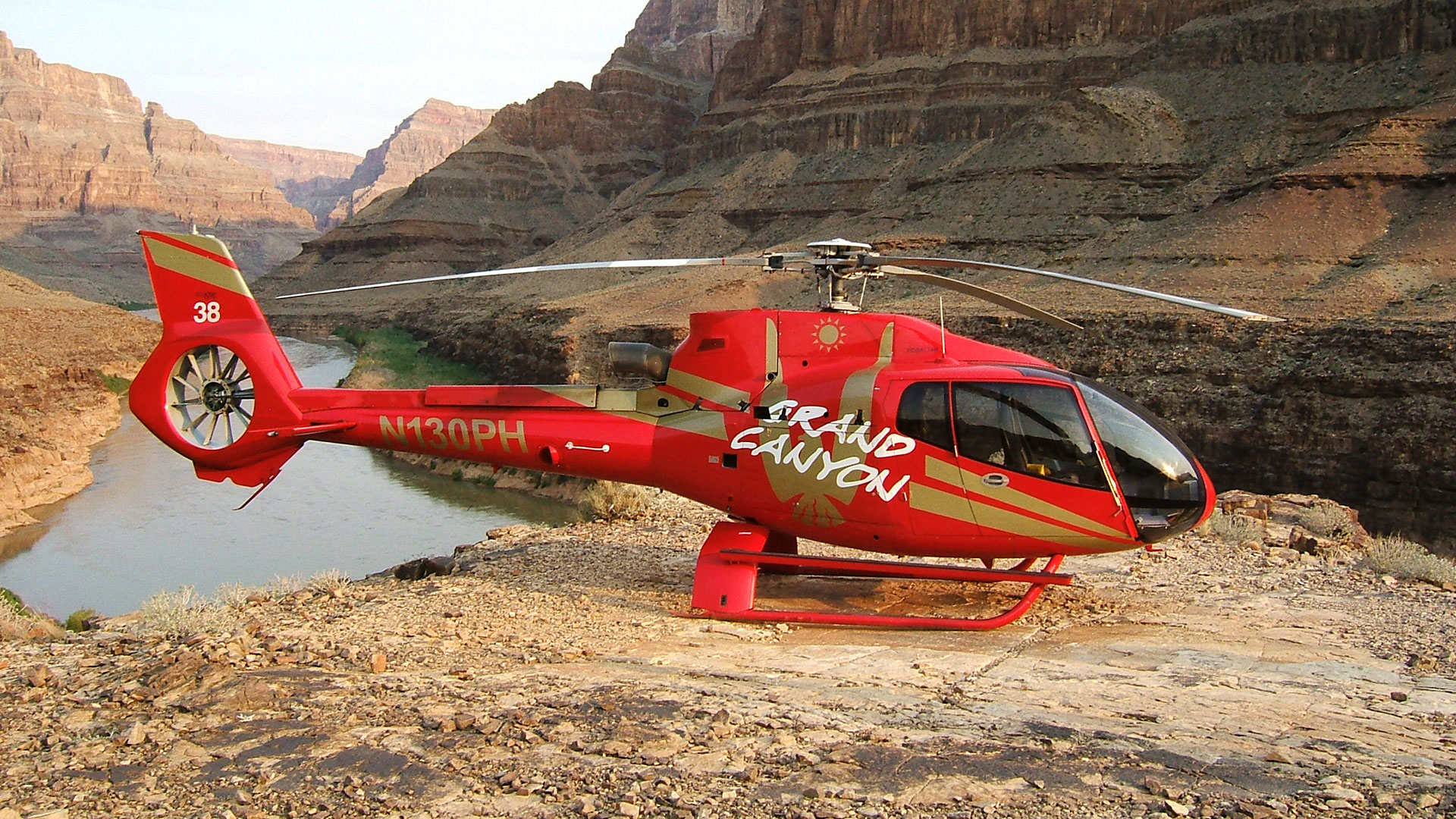
While we waited for medical help to arrive, we told stories and walked the shrubby terrain at the bottom of the Grand Canyon. We hung out with the patient, who lay on the sand under a rocky overhang. Over the course of the next day he proved to be very sick, having a hard time breathing.
We got out all our rain gear and used it to make a giant colorful X on the floor of the canyon to show the helicopter where to land. Then we looked at it for a while. We marveled at how any aircraft could make its way down into such a narrow space. It was about as wide as your living room.
But when the helicopter came into sight, that hazy inertia shifted into hyperspace. We were taken off guard, as the aircraft arrived so much more swiftly than we expected. Somehow our slow-moving leader had gotten to his high destination and gotten assistance to us within just twenty-four hours.
The helicopter dropped perilously down into the space between the rock walls and hovered up at what I thought was a ridiculous height. Three people in flight suits jumped down and raced over to the sick guy. It seemed that even before they reached him they were working on him with IVs and saline and other kinds of equipment. Expertly all these arms lifted him up and into the aircraft and ten seconds later, it seemed, they were all gone.
It felt like an alien invasion, frankly. I had never seen such a high-tech intervention in my life, especially considering that the most sophisticated piece of equipment our group had with us at the time was probably a spoon. We gathered our things together and resumed our trek, kind of stunned.
We heard later that it was a good thing that Harry made it to the hospital when he did. He had double pneumonia, something incompatible with a long hike in the Grand Canyon. It took him several weeks to recover, we heard. Afterwards we also heard that he had been on a variety of prescription medications for conditions about which the organization had been unaware.
This was in the days before HIPAA took hold; later on medical information like this would become much more privately guarded. But it served to show me what it’s like to witness a medevac, what a tough line trip leaders have to walk when there’s peril, what it means to consider a traveler healthy enough to join a group. Also how a group responds to an emergency, and how organizations have to anticipate and manage them. Not to mention who gets to pay for a pricey helicopter medevac.
In the twenty-five years I’ve specialized in group travel insurance, I’ve been at the admin end of hundreds of medical evacuations taking place all over the world, some of them using very dramatic transport. But most of them just use regular planes and vehicles, backed by a boatload of planning and accommodation and a highly involved travel organization.
Behind every medical emergency is, of course, a sick or injured traveler, and their wellbeing is the prime objective of any organization who is responsible for them. Travel-based organizations have two major risk management objectives: the first is the health and safety of their people. That’s all that most people think group travel medical insurance is for.
But the second risk management objective is the protection of an organization’s ability to carry out its mission, even with all the liabilities it brings. Keep that in mind as a key role for group travel insurance too. It shouldn’t just handle medical and travel costs. It should also protect the organization from liability, help its operations along, carry out its values, delight its travelers. Want to find out how?